Sensory Tools for Autism: Match Products to Seekers, Avoiders & Your Child's Needs
Picture this: your child crashes into the couch cushions for the umpteenth time today, or maybe they clamp their hands over their ears at the faintest hum of the refrigerator. Moments like these hit hard as a parent. You're not alone in wondering, what's going on in there? For many kids on the autism spectrum, it's their sensory world pulling the strings—craving input or dodging it entirely. That's where sensory tools for autism come in, like a personalized roadmap to calmer days.
Not every tool fits every child. Some are sensory seekers, hungry for more touch, movement, or sound. Others are avoiders, shrinking from the overload. And then there are oral seekers, forever chewing on shirt collars or pencils. This guide cuts through the confusion with a parent-to-parent approach: spot the challenge, find the fix, pick the product. Let's build your child's sensory toolbox, one match at a time.
Decoding Sensory Seekers: Craving That Extra Input
Sensory seekers thrive on stimulation. They might spin endlessly, hug tight, or seek out rough textures. Without it, meltdowns brew. The solution? Deep pressure and proprioceptive play—tools that ground them through their body.
Weighted Blankets for Autism: A Hug You Can Count On
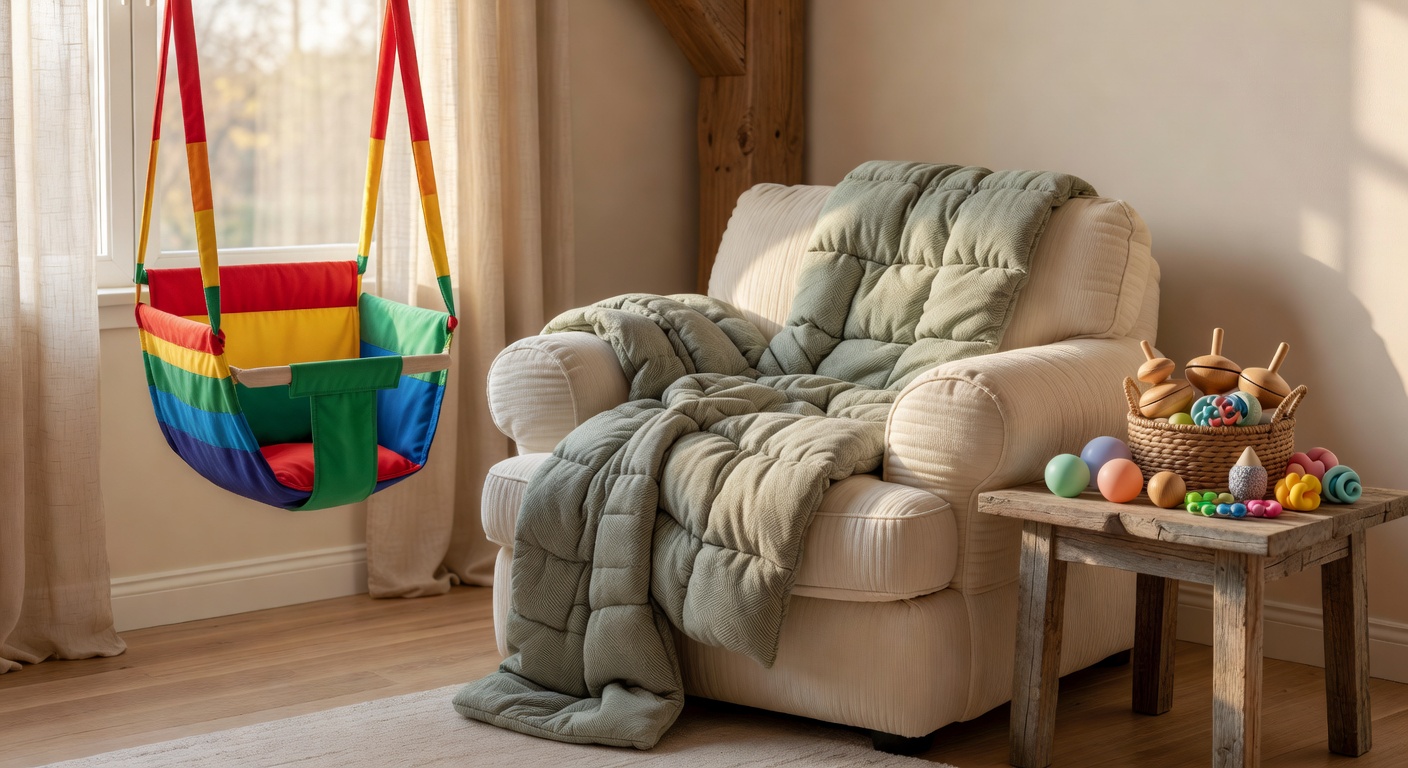
Imagine wrapping your child in a gentle, full-body embrace that lasts all nap time. Weighted blankets for autism deliver that deep pressure therapy, mimicking a therapeutic hug. Opt for 10% of their body weight (check sizing charts), filled with glass beads for even distribution. Parents rave about bedtime battles turning into peaceful slumbers—less tossing, more restful dreams.
Sensory Swings: Movement on Demand
For the spinner or jumper, a sensory swing is gold. Hang one indoors from a doorway beam or set up an outdoor hammock-style cocoon. They provide vestibular input— that rocking, swaying magic—helping seekers regulate without wearing you out chasing them. Look for therapy-grade options with crash-proof materials.
Pro tip: Layer these sensory products for children. A swing session before homework? Game-changer.
Sensory Avoiders: Shielding from the Overload
Avoiders pull away from lights too bright, tags that itch, or crowds that buzz. They need barriers to filter the chaos. Enter sensory seeker vs avoider products: calming havens and mufflers for peace.
Noise-Canceling Headphones: Silence in a Storm
The school bell or sibling chatter can shatter an avoider's focus. Noise-canceling headphones create a quiet bubble, blocking low-frequency rumbles while letting voices through if needed. Kid-sized models with soft padding prevent that clamped-ear ache—perfect for outings or melty afternoons.
Pair with dimmable lamps or fidget quilts for full retreat mode. These autism sensory gear pieces aren't just gadgets; they're lifelines to comfort.
Oral Seekers: Chew Safe, Stay Focused
That constant gnawing on everything? Oral seeking at work. It soothes anxiety and aids focus, but shirts get soggy. Solution: safe, stylish chewelry.
Chewelry: Discreet Sensory Satisfaction
Necklaces, bracelets, or pendants made from food-grade silicone—tough enough for heavy chewers, soft on teeth. Choose textures from smooth to bumpy for variety. They look like fun jewelry, so no stares at school. Swap weekly for hygiene, and watch concentration soar during reading or play.
Matching It All: Your Child's Unique Profile
Every kid's sensory needs shift—maybe mornings are seek-y, evenings avoidant. Track patterns in a journal: what triggers calm versus chaos? Test products in short bursts; rotate to prevent habituation.
- Seekers: Weighted blanket autism + swing for full-body reset.
- Avoiders: Headphones + quiet corner tent.
- Oral: Chewelry always on hand.
Wondering where to start? Our quick sensory profile quiz pinpoints seekers, avoiders, or hybrids in minutes. It's free, fast, and tailored just for you.
"It's like finally speaking their language—through touch, swing, and chew."
Building a Sensory Toolkit That Lasts
Sensory tools for autism aren't one-and-done. Invest in quality: machine-washable, durable autism sensory gear that grows with them. Chat with OTs for custom tweaks, and celebrate small wins—like a full family dinner without ear-plugs.
You're crafting more than products; you're nurturing balance. Ready to match the right ones? Take the quiz now and step into easier tomorrows.
