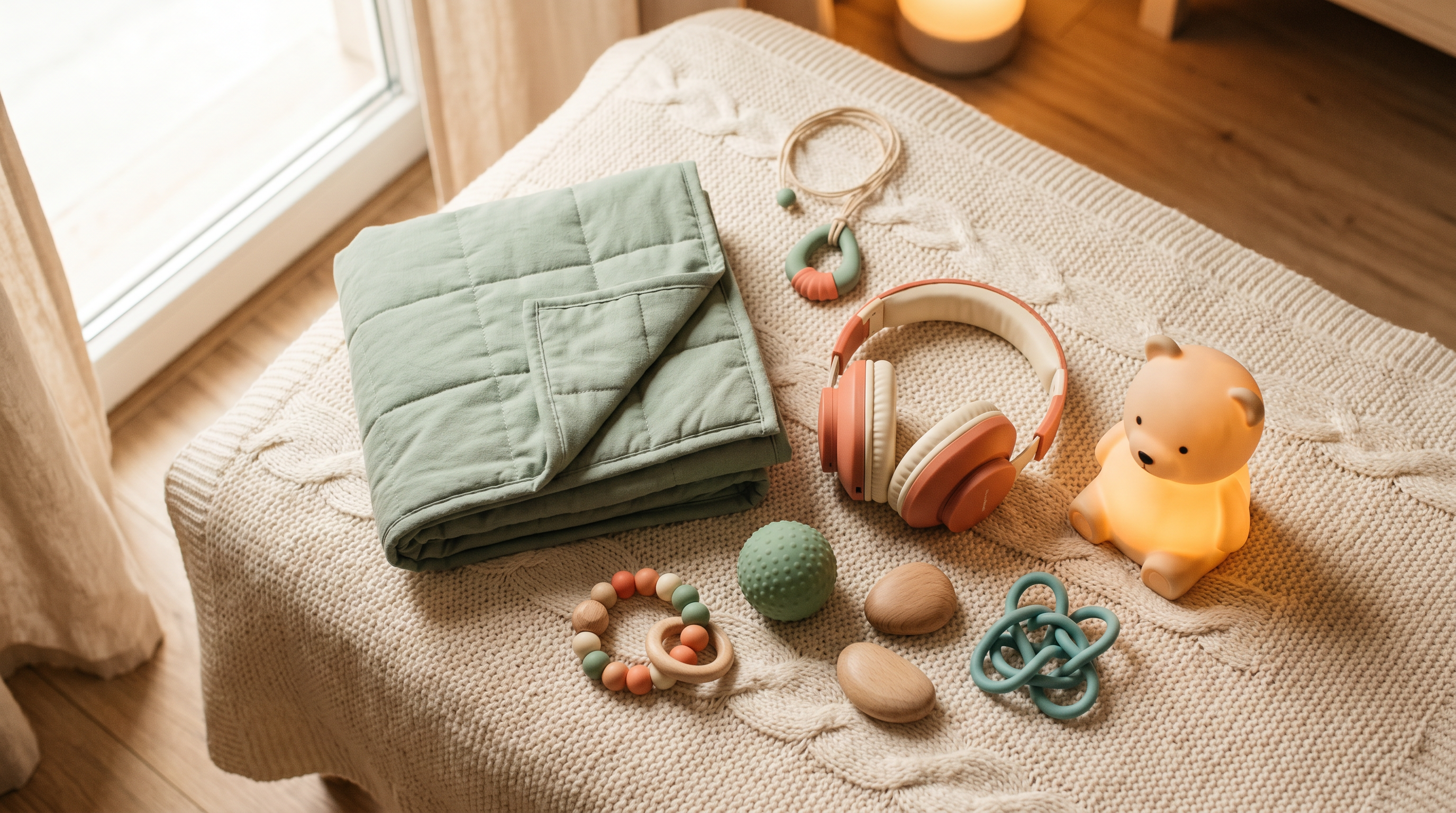
7 Calming Sensory Tools That Help During an Autistic Meltdown
You know that moment: the world tilts, your child's face crumples, and the meltdown hits like a wave. Lights buzz too bright, clothes scratch like sandpaper, every sound a hammer. You're right there with them, heart racing, searching for a way through.
These aren't just gadgets—they're sensory tools for autistic meltdowns that parents swear by after real-life trials. Backed by how our sensory systems crave input or calm, they bridge overload to regulation. Think deep pressure to ground, quiet to hush chaos. Ready to try what works today?
We'll cover seven go-to calming tools for autism: weighted blankets, noise-canceling headphones, and more. Each with why it clicks for sensory needs, plus parent-tested tips. Grab one, test it in the next tough spot. You've got this.
1. Weighted Blankets for Deep Pressure Stimulation
A weighted blanket autism favorite, these blankets pack gentle, even pressure—like a firm hug from the inside out. They're filled with glass beads or pellets, typically 10% of your child's body weight, draping over the torso during a storm.
Why it works: Deep pressure hits the proprioceptive sense—your body's position and force awareness. It floods the nervous system with calming signals, dialing down fight-or-flight, boosting serotonin and oxytocin naturally. Meltdowns often spike from under-stimulation here; this fills the gap.
Quick parent tips to make it stick:
- Start in calm moments—build positive vibes before the meltdown wave.
- Drape it over their lap or chest for 10-20 minutes; avoid full cover if they're hot.
- Pair with a quiet corner; many find it cuts meltdown length in half.
We recommend the Weighted Calming Blanket from our recommended tools page—soft, washable, sized right for kids.
2. Noise-Canceling Headphones to Block Auditory Overload
Noise-canceling headphones autism warriors love these for slicing through sound chaos. Active tech mutes low-frequency hums like fridge buzz or sibling chatter, while passive padding seals out highs.
Why it works: Auditory processing overload is meltdown fuel—sounds amplify to unbearable. These create a sound bubble, letting the brain reset without total silence. It's like flipping an off-switch on sensory assault.
Parent strategies that deliver:
- Slip them on early—before full escalation, during rising tension.
- Choose kid-sized, comfy ones; test volume limits for safety.
- Combine with deep breaths; parents report quicker calm returns.
Check the Noise-Canceling Headphones in our full resource library—lightweight and effective for daily use.
3. Sensory Chewelry for Oral Sensory Seeking
Necklaces, bracelets, or pendants made for safe chewing—sensory tools for meltdowns targeting the mouth. Food-grade silicone, textured for varied bite feels, worn like jewelry.
Why it works: Oral seeking ramps in stress—chewing regulates the vestibular and proprioceptive inputs via jaw muscles. It redirects energy from screaming or biting hands, grounding the whole system fast.
Easy wins from parents:
- Offer choices—smooth vs. bumpy to match mood.
- Keep backups clean and handy in pockets or bags.
- Use during wind-down; it often shortens recovery time.
4. Compression Clothing for Proprioceptive Input
Think seamless shirts, leggings, or vests hugging the body snugly. Calming tools for autism like these provide constant, mild pressure without bulk.
Why it works: Proprioception craves body awareness; loose clothes can feel chaotic. Compression boosts that input, calming the amygdala—the brain's alarm center—much like swaddling does for babies.
Pro tips parents share:
- Layer under regular clothes for all-day wear.
- Size up if new—too tight backfires.
- Great for school transitions; prevents buildup.
5. Calming Sensory Lights for Visual Regulation
Soft-glow projectors or LED strips in slow-shifting colors—dim, soothing visuals over harsh fluorescents. Portable for any room or car.
Why it works: Visual overload fries the system; flickering lights trigger meltdowns. These provide predictable, low-stimulation patterns, helping the eyes (and brain) refocus and relax.
Parent hacks:
- Dim to lava-lamp mode during peaks.
- Battery-powered for outings.
- Pair with headphones for multi-sensory reset.
6. Fidget Tools for Tactile Grounding
Squishies, spinners, or textured balls—pocket-sized sensory tools autistic meltdown essentials. Varied textures invite touch without mess.
Why it works: Tactile input anchors wandering focus; unmet needs build tension. Fidgeting channels that into safe, repetitive motion, releasing dopamine for calm.
Smart parent moves:
- Rotate options to avoid boredom.
- Clip to clothes for instant access.
- Quiet ones for public spots.
7. Sensory Swings for Vestibular Input
Hammock-style or platform swings indoors—gentle rocking or spinning motion. Compact for home use.
Why it works: Vestibular sense (balance/movement) dysregulation fuels spins. Controlled swings reorganize it, easing dizziness or anxiety at meltdown core.
Parent favorites:
- Short sessions: 5-10 swings slow and steady.
- Secure setup first—safety rules.
- Post-swing cooldown with blanket.
Quick Reference: Your Meltdown Toolkit
- Overload sound: Noise-canceling headphones
- Body calm: Weighted blanket or compression gear
- Mouth need: Chewelry
- Visual reset: Sensory lights
- Hands busy: Fidgets
- Movement fix: Sensory swing
Pro tip: Prevent with the Visual Schedule Builder Kit. Reconnect after with Communication Flip Book.
Layer These Sensory Tools for Meltdowns and Watch the Shift
One tool sparks calm; combos transform routines. Notice patterns—what works for noise won't always for movement. Track, tweak, repeat.
How to calm autistic child during meltdown starts with knowing triggers. That's where our free quiz shines.
Take the "What's Really Behind Your Child's Meltdowns?" quiz now at /quiz. Pinpoint sensory hot spots in minutes, pick tools faster. You've handled tough days—now make them shorter. Start here.
