Visual Communication for Autism: Top Tools to Unlock Meaningful Connections
Picture this: your child, once trapped in a whirlwind of frustration because words wouldn't come, now points confidently to a vibrant image of an apple, eyes lighting up as you hand it over. That simple exchange? It's the spark of connection. For parents of autistic children, visual communication for autism isn't just a strategy—it's a bridge across the silent gaps that words often leave behind.
Autism spectrum disorder reshapes how the brain processes language, often favoring images over abstract speech. Visual tools tap into this strength, turning everyday challenges into triumphs. They reduce anxiety, clarify expectations, and foster independence. In a world buzzing with verbal cues, these aids cut through the noise, helping kids express needs, emotions, and ideas with clarity and confidence.
Why Visual Communication Transforms Lives
Children with autism frequently excel at visual processing—their minds latch onto pictures, symbols, and patterns like a magnet to steel. Spoken language, with its fleeting sounds and nuances, can overwhelm. Visuals provide permanence: a schedule on the wall doesn't vanish mid-sentence. They build predictability, easing meltdowns born from uncertainty.
Think of it as translating the inner world outward. A child grabs a card showing "bathroom" instead of tugging your sleeve in distress. Over time, these tools layer skills, paving the way for verbal growth. Parents witness not just compliance, but joy—the thrill of being understood.
Top Visual Communication Tools for Autism
From low-tech cards to high-tech apps, the arsenal is vast. Here's a curated lineup of proven tools, each designed to unlock meaningful interactions.
1. Picture Exchange Communication System (PECS)
PECS reigns as a cornerstone of visual communication for autism. Kids exchange picture cards for desired items or actions, bypassing speech entirely at first. Start with basics like "eat" or "play," progressing to sentences. Its genius? It empowers the child to initiate, flipping passive waiting into active requesting. Laminating cards keeps them durable for daily use.
2. Visual Schedules
Chaos dissolves with a glance at a Velcro-backed board sequencing the day: breakfast, school, park. Customize for home or classroom, using photos of your child's actual routines for instant recognition. Transition anxiety plummets as kids "see" what's next, fostering autonomy. Portable versions fit in bags for outings.
3. Social Stories
Crafted narratives with pictures explain social scenarios—like sharing toys or waiting in line. Simple panels guide: "Sometimes I wait. Waiting helps me play soon." Read together repeatedly; the visuals demystify unwritten rules, reducing overwhelm in group settings. Free templates abound online for personalization.
- Target specific challenges, like doctor's visits.
- Pair with emotions for deeper insight.
- Update as skills grow.
4. Emotion Charts and Feeling Faces
Decoding feelings starts with faces: happy sunbursts, angry storm clouds. Wall charts or handheld fans let kids point to "sad" during tough moments. This builds emotional vocabulary visually, easing outbursts by naming the unnamed. Apps amplify with animations, but printed versions shine for hands-on learning.
5. AAC Apps and Digital Boards
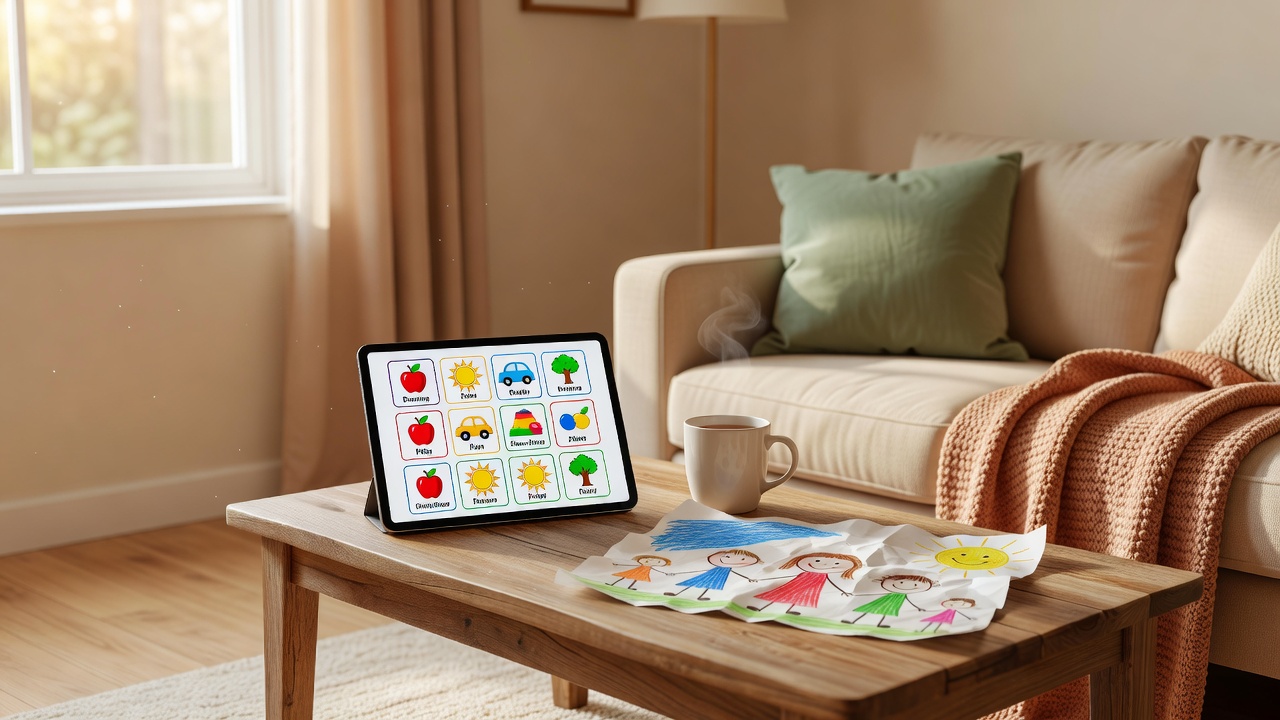
Tech meets tradition in apps like those offering symbol grids on tablets. Tap icons to speak phrases aloud, customizing voices and images. Ideal for verbal progress, they grow with the child—from single words to full stories. Pair with eye-tracking for advanced needs. Affordability has soared, making them accessible.
Implementing Visual Tools: A Parent's Roadmap
Dive in gradually. Observe your child's preferences—colors, themes—then introduce one tool at a time. Consistency is key: use across environments for reinforcement. Collaborate with therapists for tailored phases. Track wins in a journal: fewer tantrums, more requests. Resources like symbol libraries (think ARASAAC) provide free visuals.
Challenges? Some kids resist novelty; persist with praise. Over time, visuals scaffold speech, not replace it. You're not just teaching tools—you're handing keys to the world.
Building Lasting Connections
Visual communication for autism isn't a fix—it's a foundation. It whispers to your child's unique wiring, amplifying their voice in pictures until words follow. One pointed image at a time, bonds deepen, frustrations fade, and futures brighten. You've got this. Start small, celebrate big, and watch connections bloom.
