Sensory Home Audit Guide: Low-Cost Tips for an Autism-Friendly Home & Sensory Regulation
Why Your Home Might Be Overwhelming Your Child
Picture this: fluorescent lights buzzing faintly overhead, the distant hum of a refrigerator kicking in, textures from a scratchy blanket brushing against sensitive skin. For parents of autistic children, these everyday elements can transform a cozy home into a sensory minefield. A simple sensory home audit changes that. It’s your roadmap to crafting an autism-friendly home where calm prevails and meltdowns fade.
Sensory processing differences affect up to 90% of autistic individuals, turning ordinary stimuli into chaos. But with low-cost tweaks, you can regulate these inputs, fostering sensory regulation that supports focus, sleep, and joy. This guide walks you through it—no big budgets required, just observation and intention.
Step-by-Step Sensory Home Audit: Spot the Triggers
Start your sensory home audit like a detective on a quiet mission. Grab a notebook, dim the lights, and roam each room at your child’s typical high-energy times. Note what buzzes, blinks, or bites.
The Audit Checklist
- Visual Triggers: Harsh lights? Cluttered walls? Flickering screens?
- Auditory Overload: Dripping faucets? Echoey floors? Appliance whirs?
- Tactile Sensitivities: Rough fabrics? Sticky surfaces? Drafty corners?
- Proprioceptive Input: Cramped spaces? Unstable furniture?
- Olfactory Assaults: Strong cleaners? Lingering food smells?
- Vestibular Challenges: Slippery floors? Steep stairs without rails?
Rate each on a 1-10 overwhelm scale. Walk in your child’s shoes—literally. Crawl under tables, press against walls. This reveals hidden hurdles in your path to an autism-friendly home.
Low-Cost Fixes: Room-by-Room Transformation
Kitchen and Dining: Taming the Chaos Hub
Kitchens roar with blenders and clanging pots. Swap overhead fluorescents for $5 LED bulbs with soft warm glows. Cover hard floors with remnant rugs from discount stores—muffles echoes, softens steps. Store strong-smelling spices in sealed jars; wipe counters with mild vinegar solutions.
Bedrooms: Sanctuaries for Restful Sensory Regulation
Prioritize sleep zones. Blackout curtains ($10 at thrift shops) block streetlights. Weighted blankets from old quilts (DIY with rice packets) provide deep pressure for calm. Wall hooks for fidget toys keep clutter at bay, easing visual noise.
Living Areas: Balanced Play and Recharge Spots
Rearrange furniture into zones: soft seating nooks with pillows from garage sales. Acoustic panels? Foam pool noodles sliced and glued to walls. Dimmer switches (under $15) dial down TV glare during family movie nights.
Bathrooms: Gentle Transitions
Echoes amplify here. Nonslip mats double as sound dampeners. Scent-free soaps avoid olfactory spikes. Glow-in-the-dark stickers mark switches for low-light navigation.
Crafting Sensory Regulation Corners: Daily Reset Buttons
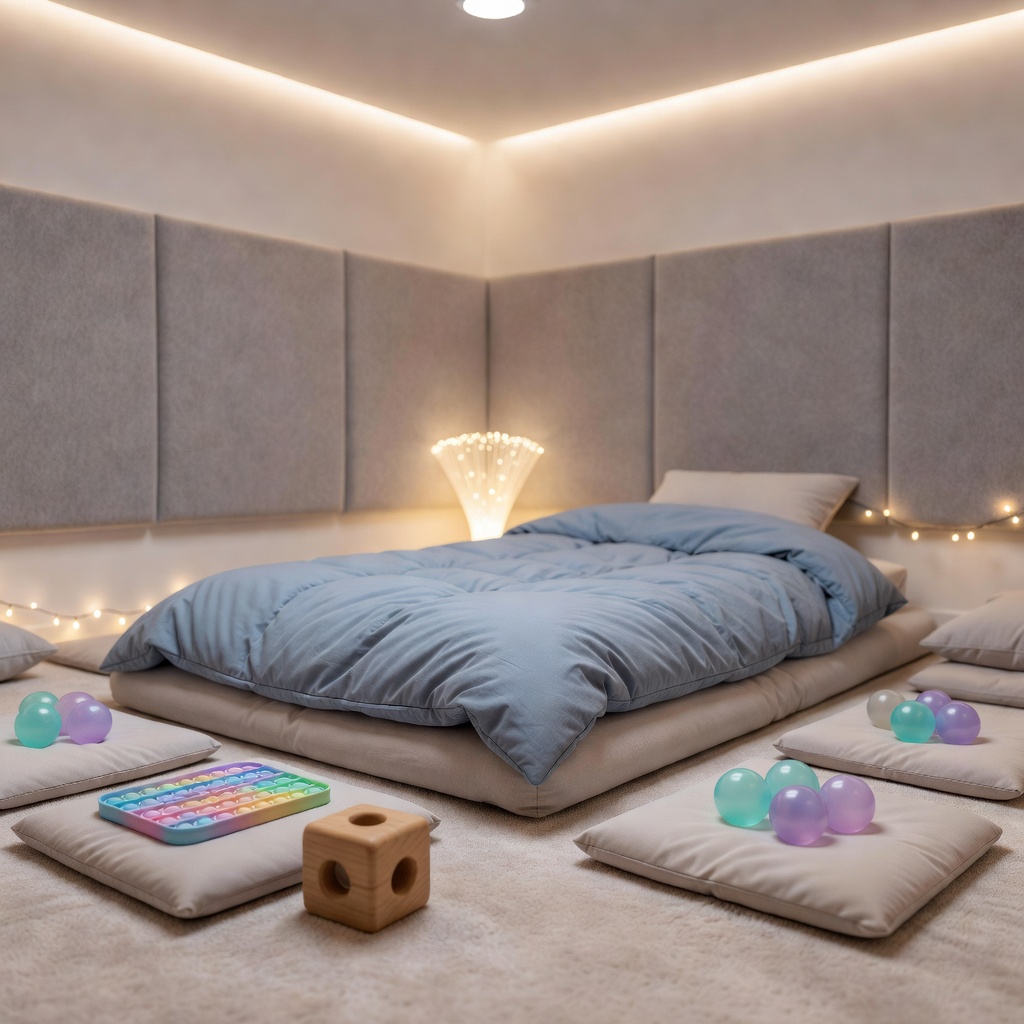
An autism-friendly home shines with dedicated sensory regulation spots. Carve out a 4x4-foot corner with a tension rod curtain ($8). Inside: crash pads from stacked cushions, noise-canceling earmuffs from soft headphones, chewable silicone necklaces.
- Calming Kit: Lavender sachets (dry rice + essential oil drops), bubble tubes from dollar-store lamps.
- Alerting Kit: Crunchy snacks, vibrating toys from recyclables.
- Deep Pressure: Beanbag chairs sewn from thrift pillows.
Teach your child: “This is your calm cave.” Rotate items weekly to maintain novelty without overwhelm.
Sustaining Your Autism-Friendly Home: Long-Term Habits
Your sensory home audit isn���t one-and-done. Monthly check-ins catch creeping clutter. Involve your child in tweaks—empowers them in sensory regulation. Track progress with a simple journal: fewer meltdowns? Better sleep? These wins fuel momentum.
Remember, perfection isn’t the goal. A home that flexes with your child’s needs is victory. Small changes ripple into profound peace.
In the quiet redesign of walls and whispers, you build not just a house, but a haven.
Ready to audit? Your family’s calmer tomorrow starts today.
