5 Essential Visual Communication Tools for Autism: PECS, AAC Devices, Visual Schedules & More
Imagine the frustration melting away as your child, who moments ago was overwhelmed and nonverbal, hands you a simple picture of a snack. Suddenly, a bridge forms—a quiet exchange that sparks understanding and connection. For parents navigating the world of autism, these moments are gold. Visual communication tools transform chaos into clarity, empowering kids to express needs, emotions, and ideas without relying solely on spoken words. In this new Communication category, we dive into five essential autism communication tools that harness the power of visuals, focusing on proven options like PECS, AAC for autism, and visual schedules. These aren't just aids; they're lifelines for building independence and reducing meltdowns.
Why Visuals Are a Game-Changer for Children with Autism
Many children on the autism spectrum process information visually first. Words can blur into noise amid sensory overload, but a clear image cuts through like sunlight through fog. Autism communication tools centered on visuals tap into this strength, fostering confidence and interaction. Whether your little one is nonverbal or struggles with expressive language, these tools offer a scaffold to speech—or a fulfilling alternative. Parents often report fewer tantrums and more predictable days once visuals become routine. Let's explore the top five, starting with a foundational system that's reshaped countless homes and classrooms.
1. Picture Exchange Communication System (PECS)
The Basics and How It Builds Skills Step by Step
PECS stands out as one of the most structured autism communication tools, designed specifically for young children who don't yet use words functionally. It begins with a simple exchange: your child hands over a picture card—like one depicting "apple"—to receive the real thing. This immediate reinforcement teaches initiation, a critical first step.
Developed through phases, PECS evolves from single pictures to sentences via a Picture Communication Book. By phase four, kids travel to the book, discriminate symbols, and build requests like "I want juice." Imagine mornings where instead of tears, your child flips open their book and constructs a visual plea for breakfast. It's hands-on, portable, and adaptable to daily life.
Practical Tips for Parents
- Start small: Use laminated cards for favorites like food or toys. Reinforce every exchange promptly.
- Pair with play: During snack time, prompt the exchange before offering items.
- Track progress: Note phases mastered to celebrate wins and adjust.
- Customize visuals: Photos of your home routines make it personal and motivating.
PECS shines because it empowers proactive communication, often leading to spontaneous speech as a bonus. It's low-cost and therapist-approved for home use.
2. AAC Devices: High-Tech Bridges to Expressive Language
From Apps to Dedicated Devices
Augmentative and Alternative Communication (AAC) for autism takes visuals digital, turning tablets or dedicated devices into voice-output powerhouses. Picture your child tapping a grid of symbols—an apple icon speaks "I want apple" in a clear voice. Apps like Proloquo2Go or TouchChat offer customizable vocabularies, from core words (go, stop, more) to fringes (specific family names).
High-tech AAC ranges from iPad-based software to robust speech-generating devices. Low-tech cousins include communication boards, but devices add auditory feedback, modeling speech for imitation. For families, it's like giving your child a superpower: fluid expression across environments, from playground pleas to classroom check-ins.
Getting Started at Home
- Assess needs: Consult a speech-language pathologist for device trials.
- Model constantly: Tap and speak first, so your child learns by watching.
- Integrate daily: Use during meals, play, and outings for natural practice.
- Expand gradually: Unlock new pages as skills grow, keeping it engaging.
AAC for autism isn't a crutch—it's a catalyst, often sparking verbal breakthroughs while honoring visual strengths.
3. Visual Schedules: Mapping the Day for Predictability
Turning Routines into Reassuring Roadmaps
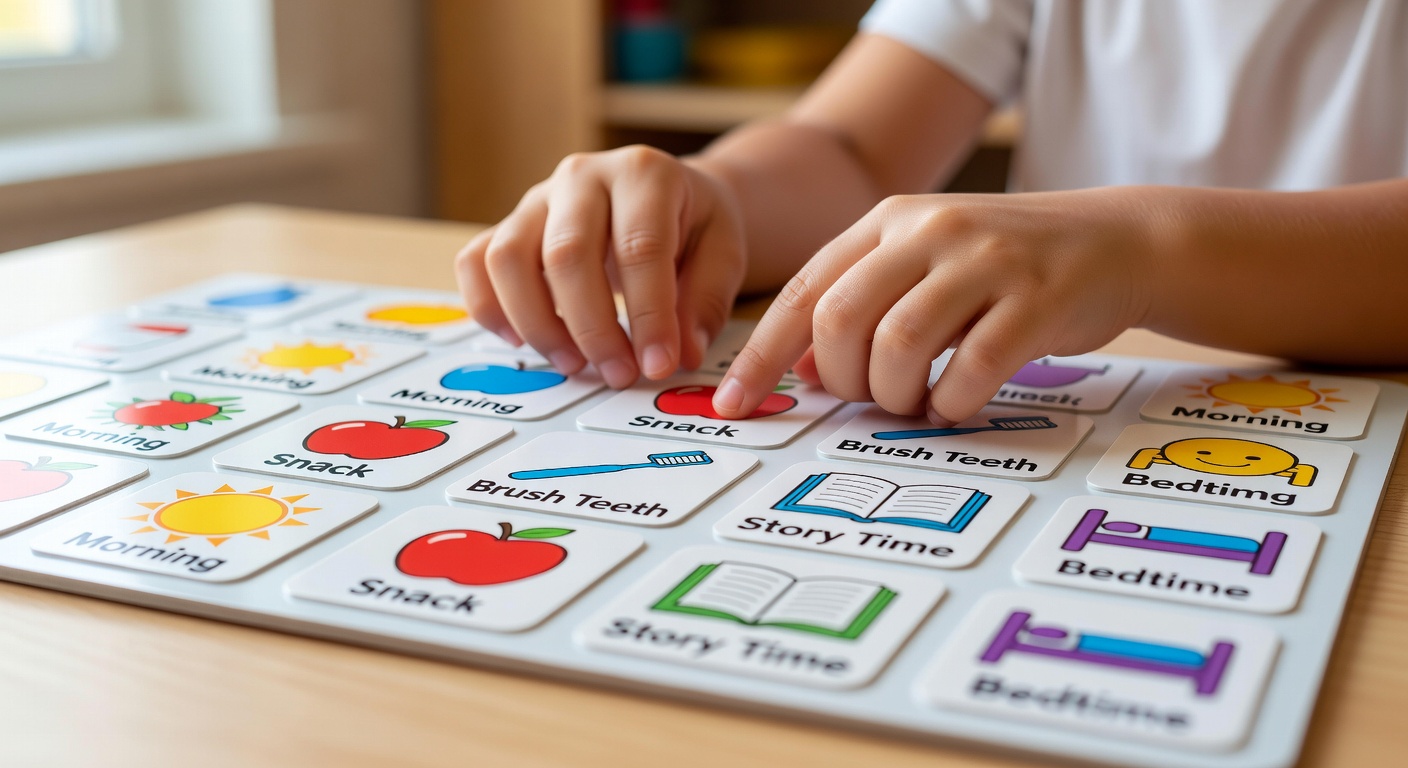
Visual schedules top the list of autism communication tools for easing transitions, that notorious trigger for distress. A sequence of pictures—bath, then story, then bed—lays out the day's flow. Velcro strips on a wall chart let kids check off tasks, fostering autonomy and slashing anxiety.
From full-day planners to mini Now/Next boards ("first dinner, then iPad"), these tools whisper, "I see you, and here's what's next." Mornings shift from battles to checklists; your child points to "school," grabs their bag, and moves on.
Customization for Your Family
- Snap real photos: Your actual toothbrush or front door boosts recognition.
- Make it interactive: Use magnets or flips for completion.
- Adapt for ages: Toddlers love simple pairs; older kids handle hourly breakdowns.
- Review together: Evening chats about the schedule build reflection skills.
Visual schedules don't just communicate time—they communicate control, a gift every parent yearns to give.
4. Choice Boards: Empowering Decisions Visually
Choice boards are compact autism communication tools that prevent overload by offering clear options. A laminated sheet with six snack pics lets your child point to grapes over crackers, nipping demands in the bud. Portable and versatile, they extend to activities (park or puzzle?) or emotions (happy or sad?).
The magic lies in agency: kids feel heard, meltdowns drop, and preferences emerge. Clip to a fridge or carry in a wallet—these boards fit busy mom life seamlessly.
- Limit options: Three to six prevents decision paralysis.
- Update seasonally: Swap summer pics for holiday ones.
- Pair with PECS: Use as sentence starters.
5. Social Stories: Visual Narratives for Social Success
Social stories weave pictures and simple text into mini-guides for tricky situations, like sharing toys or waiting in line. "When I go to the store, I hold Mommy's hand. Then I get a treat!" paired with photos prepares kids mentally, boosting social communication.
Created collaboratively, they're tailored therapy in book form. Read before events; watch understanding dawn.
- Keep short: 5-7 pages max.
- First-person voice: "I will..." builds ownership.
- Revisit: Fade as mastery grows.
Bringing It All Together: Your Toolkit for Connection
These five autism communication tools—PECS, AAC devices, visual schedules, choice boards, and social stories—form a versatile arsenal. Mix them: a schedule with embedded choice boards, PECS leading to AAC. Consult pros for personalization, but start today with DIY versions. The payoff? Eyes lighting up, hands reaching out, words (or their visual kin) flowing. You're not just teaching communication; you're unlocking your child's world. In the quiet triumph of a pointed picture, you'll find the deepest bond—one visual at a time.
