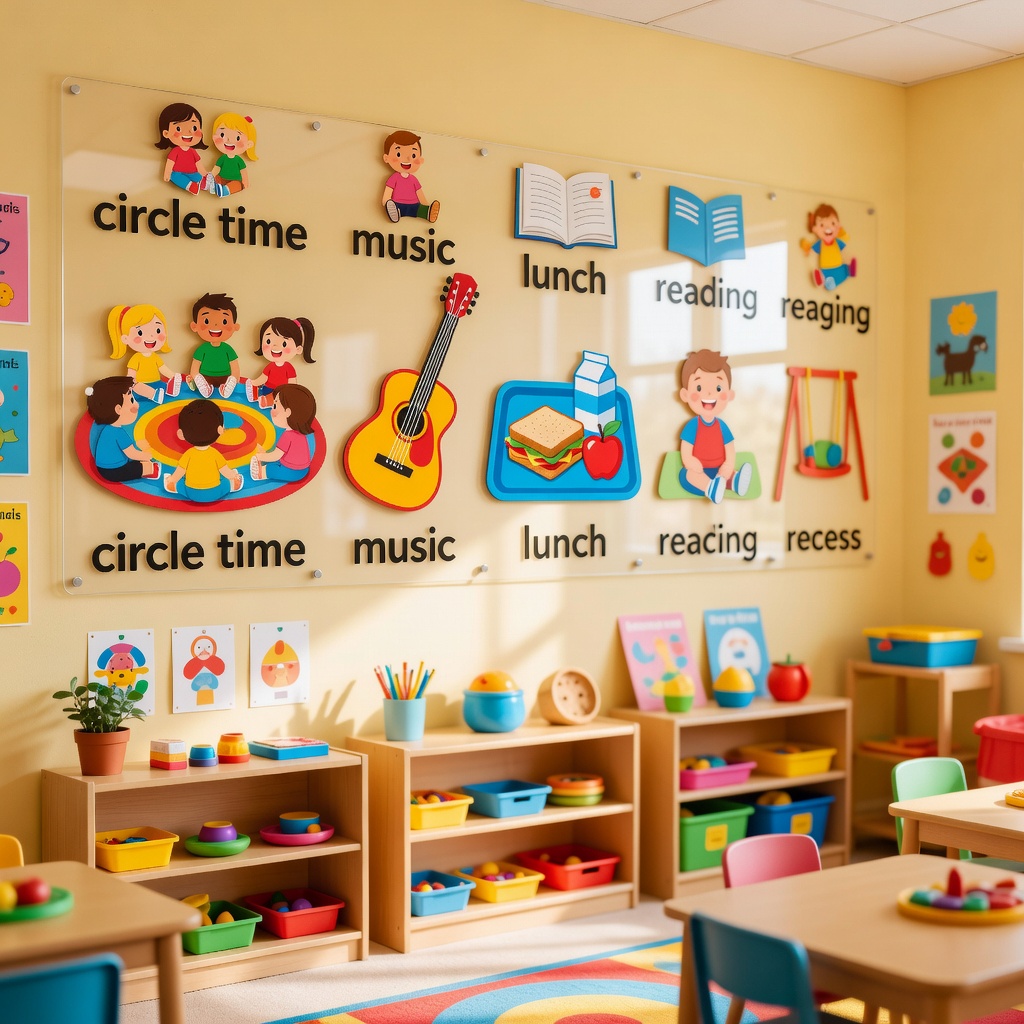
5 Visual Schedule Strategies That Calm Classroom Chaos
Picture this: the bell rings, chairs scrape, and a wave of uncertainty crashes over your classroom. For neurodivergent students, especially those on the autism spectrum, this daily ritual can ignite a storm of anxiety, meltdowns, or shutdowns. But what if a single glance at a colorful strip of images could hush the chaos? What if visual schedules became your secret weapon in classroom management for autism?
Autistic students often thrive on predictability. Their brains, wired differently, crave structure amid the sensory overload of school bells, shifting groups, and unexpected changes. Without it, the classroom turns into a battlefield of confusion. Enter visual schedules—simple, powerful autism classroom tools that provide a roadmap for the day. These aren't just charts; they're lifelines that reduce anxiety, boost independence, and transform teaching moments from survival to success.
As special education teachers, classroom educators with neurodivergent students, or autism support professionals, you've likely seen the difference a clear visual cue makes. Yet implementing them effectively requires strategy. In this guide, we'll dive into five proven special education strategies using visual schedules. Each breaks down the what, why, and how, with practical steps tailored for real classrooms. Whether you're supporting pre-symbolic learners or tech-savvy teens, these neurodivergent students support tools will help you create calm where chaos once reigned.
Ready to reclaim your classroom's peace? Let's explore how predictability isn't just nice—it's transformative.
Strategy 1: Individual Desk Schedules – Personalized Roadmaps Right at Their Fingertips
What Are Individual Desk Schedules?
Imagine a laminated strip, no bigger than a ruler, Velcroed to the edge of a student's desk. Adorned with photographs or icons representing the morning routine—math icons, snack pictures, recess symbols—it serves as a personal daily planner. Unlike whole-class charts, these visual schedules are hyper-customized, moving piece by piece as tasks complete.
Why They Work for Autistic Students
For many autistic learners, time is abstract and slippery. Verbal instructions evaporate amid distractions, but visuals anchor them. These desk schedules combat 'now/what's next?' anxiety, a common trigger for outbursts. Research-backed and teacher-tested, they foster autonomy, cutting teacher prompts by up to 70% in some cases, while building executive functioning skills like sequencing and self-monitoring.
Consider the ripple effect: one student independently transitions to reading group, freeing you to support another. It's classroom management for autism at its most elegant—proactive, not reactive.
How to Implement Individual Desk Schedules
- Gather materials: Laminated cardstock, Velcro dots, clear images (use free apps like Pictos or custom photos of your classroom activities).
- Co-create with the student: Sit together to sequence their day, ensuring buy-in. Limit to 4-6 tasks initially.
- Teach the system: Model moving the 'now' icon to 'done,' praising efforts lavishly.
- Adapt and fade: Shorten as independence grows; transition to checklists for older students.
- Troubleshoot: If resistance arises, check for overwhelming visuals—simplify ruthlessly.
In one elementary classroom, a third-grader with autism who once bolted during group work now checks his desk strip, completes tasks, and even helps peers. Small tool, seismic shift.
Strategy 2: First-Then Boards for Seamless Transitions
What Are First-Then Boards?
A compact powerhouse: two slots labeled 'First' and 'Then,' each holding a picture card. 'First: Finish math worksheet. Then: iPad time.' Portable and punchy, these autism classroom tools excel for bite-sized transitions, from seatwork to specials or clean-up to recess.
Why They Work
Transitions are meltdown magnets for autistic students, who struggle with shifting gears due to rigid thinking patterns. First-Then boards create a contractual clarity: endure the non-preferred, unlock the preferred. This leverages their logical mindset, slashing protest behaviors and building tolerance for flexibility—a cornerstone of neurodivergent students support.
The magic? Immediacy. No vague 'later' promises; visuals make rewards tangible, turning 'no' into 'yes, after.'
How to Implement First-Then Boards
- Select high-impact transitions: Start with homework to break or circle time entry.
- Personalize rewards: Use student-chosen icons—legos, swings, sensory breaks.
- Pair with verbal: "First math, then computer," while pointing emphatically.
- Reinforce success: Move the 'first' card to 'done' together, celebrate.
- Expand gradually: Evolve to First-Then-Next for longer sequences.
Teachers report transitions dropping from 10-minute sagas to smooth 30-second shifts. Predictability breeds peace.
Strategy 3: Concrete Object Schedules for Pre-Symbolic Learners
What Are Concrete Object Schedules?
Forget pictures—these are tactile timelines using real objects: a spoon for snack, a book for storytime, a ball for PE. Objects slot into a sequence strip or box, physically rearranged as activities complete. Ideal for nonverbal or pre-symbolic autistic learners who process concrete over abstract.
Why They Work
For students operating at early developmental stages, symbols confuse; objects communicate universally. They tap into multi-sensory learning, reducing frustration from misunderstood directions. As special education strategies, they bridge communication gaps, promote engagement, and lay groundwork for symbolic visuals later—empowering profound growth.
How to Implement Concrete Object Schedules
- Inventory daily objects: Mini replicas or actual items (e.g., tiny chair for circle time).
- Build the schedule: Use a felt strip or muffin tin; sequence 3-5 items.
- Demonstrate repeatedly: Hand the object, say/do the activity, move to 'finished' pouch.
- Incorporate choice: Offer two objects for flexibility practice.
- Monitor and transition: Photograph objects to fade to pictures over time.
One preschooler, once overwhelmed by routine changes, now grabs his spoon proactively. Objects turn passivity into participation.
Strategy 4: Digital Visual Schedules & Interactive Timers
What Are Digital Visual Schedules?
Tech-forward visual schedules: apps like Choiceworks, First Then Visual Schedule, or custom Google Slides on tablets. Swipeable sequences with timers, voiceovers, and animations make days dynamic. Timers visually countdown, like sand slipping away, paired with icons.
Why They Work
Upper elementary and beyond crave engagement; digital tools gamify structure, appealing to visual-spatial strengths in autism. Interactive elements teach time concepts, curb 'are we there yet?' queries, and adapt instantly to changes—perfect for classroom management for autism in flexible schedules.
Bonus: Data tracking reveals patterns, informing IEPs.
How to Implement Digital Visual Schedules & Timers
- Choose accessible apps: Free/low-cost, offline-capable, simple interfaces.
- Customize daily: Upload class-specific photos; set audio cues.
- Integrate timers: Visual bars deplete for work sessions, vibrating alerts.
- Teach independence: Practice app navigation in low-stakes moments.
- Backup analog: Charge devices; have printouts ready.
Middle schoolers check tablets independently, transitions fluid. Tech meets neurodiversity where it lives.
Strategy 5: Classroom 'Check-In' Stations for Fostering Independence
What Are Check-In Stations?
Dedicated zones—wall-mounted or table-top—with full-day visuals, checklists, and tokens. Students self-check progress, move magnets or clips, earning rewards. A hub for all visual schedules, promoting peer modeling.
Why They Work
Group visuals normalize support, reducing stigma while teaching social cues. They build self-regulation, a lifelong skill for autistic students, and scale for whole-class neurodivergent students support. Independence soars as students own their day.
How to Implement Check-In Stations
- Design invitingly: Eye-level, colorful, with pockets for personal schedules.
- Populate universally: Core routine + flexible slots for subs or events.
- Set protocols: Morning check-in ritual; prompts fade over weeks.
- Incentivize: Token economy linked to completion.
- Review weekly: Adjust based on usage data.
Classrooms buzz with purpose as students cluster confidently, schedules in hand. Community born from clarity.
Conclusion: Start Small, Start Today – Your Path to a Calmer Classroom
Visual schedules aren't a cure-all, but they're a catalyst. From desk strips whispering reassurance to digital timers ticking toward triumph, these five strategies equip you to tame chaos with compassion. You've got the tools; now pick one.
Start with a First-Then board this week—it's quick, visible, impactful. Watch the shift: fewer prompts, more pride, endless potential. Your autistic students deserve this predictability; your classroom deserves the calm. Download free templates and transform today. The quiet revolution begins with you.
In the rhythm of routines made visible, chaos yields to harmony.
